Clear vision can change the way a skier responds to terrain, especially when temperature, exertion, and humidity fluctuate within the same run. Clear Ski goggles are therefore not defined by lens transparency alone; their performance also depends on how effectively warm, moist air moves away from the inner lens surface. From our perspective at YIJIA Optical, ventilation should be treated as part of the overall optical and frame architecture rather than an isolated accessory.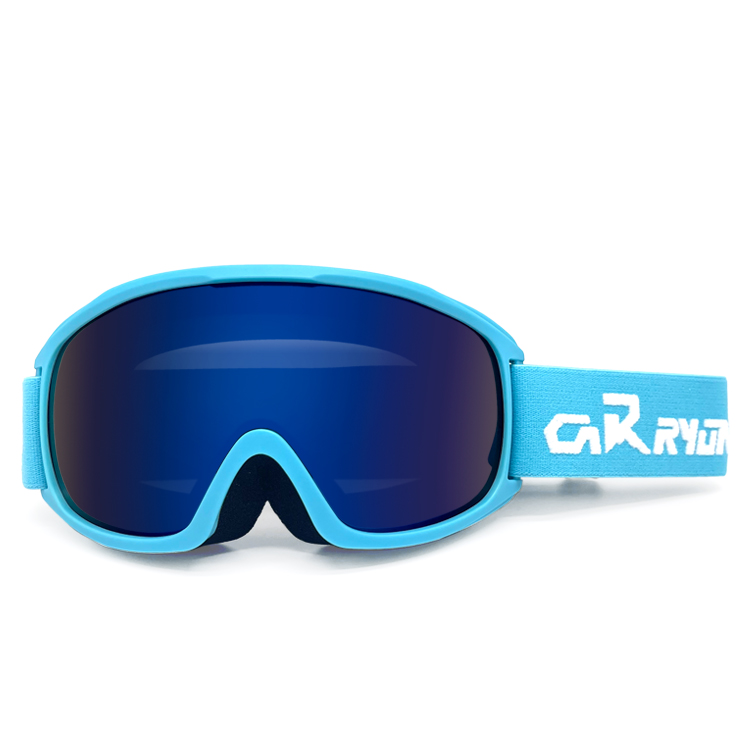
Fog develops when moisture-laden air near the face meets a colder lens surface and condenses into tiny droplets. The process becomes more noticeable during high-intensity activity because body heat and respiration raise the humidity inside the goggle. If that air remains trapped, visual clarity can deteriorate even though the lens itself has suitable optical characteristics.
A well-designed ventilation system creates controlled pathways between the interior and exterior of the frame. Air entering through lower or lateral openings can interact with warmer internal air, while upper channels provide routes for heat and moisture to move outward. The objective is not simply to increase the number of openings, since uncontrolled airflow may expose the wearer to excessive wind or snow.
For UV Ski goggles, ventilation is one component of a much broader performance system. Lens protection, facial fit, airflow, and environmental conditions all influence the final wearing experience.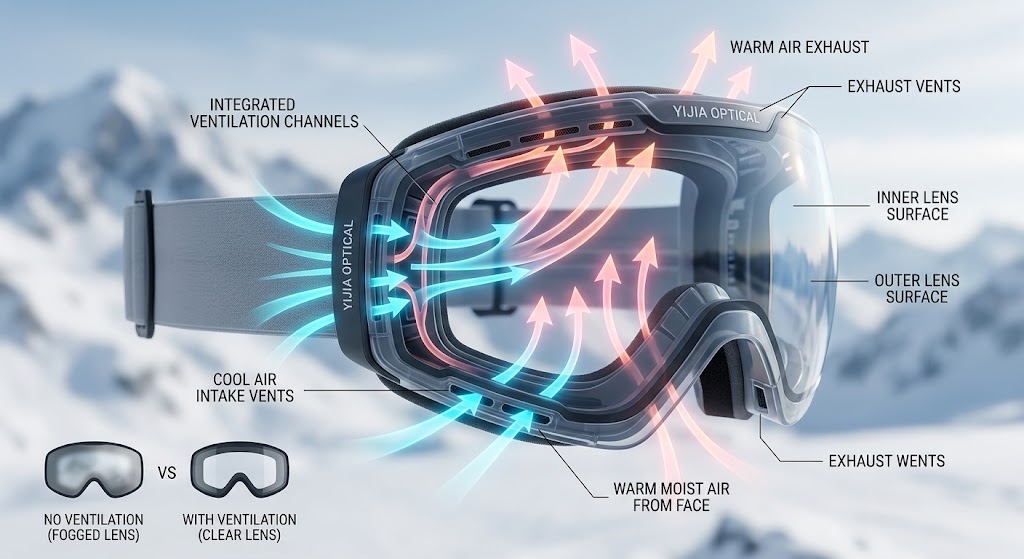
The location of a ventilation opening matters as much as its size. Channels positioned around the frame can encourage air circulation across the inner lens area without requiring large exposed gaps. This approach gives designers more control over airflow while preserving the structural role of the frame.
Internal geometry also can affect how efficiently moisture travels. Narrow passages, angled surfaces, and strategically positioned vents nay help guide humid air toward exit points. The surrounding foam must work with these channels rather than obstructing them, which makes the relationship between frame construction and facial interface particularly important.
A practical evaluation should therefore examine airflow as a system instead of judging individual vents in isolation.
Lens technology remains closely connected with fog management. Materials, coatings, curvature, and lens construction can all affect how the surface responds to moisture and temperature changes. Even an advanced lens may experience condensation if warm, humid air has nowhere to move.
The YH855 snowboard goggle provides a useful example of this combined approach. Its uses a TPU frame with magnetic, interchangeable PC lenses, while the listed functions include UV400 protection, dual-layer lens anti-fog performance, and polarized lenses. Its three layers of high-density breathable sponge also show how the facial interface can be considered alongside lens and ventilation requirements. These features demonstrate how optical protection and airflow considerations can coexist within one goggle design.
For clear Ski goggles, maintaining visibility requires more than selecting a transparent-looking lens. The surrounding frame has to support the lens by managing the environment immediately behind it.
More airflow is not automatically better. A skier moving at speed already encounters substantial wind pressure, and oversized openings may allow snow, cold air, or external moisture to enter the goggle. Frame ventilation consequently requires a balance between sufficient circulation and appropriate environmental shielding.
The same principle applies across different skiing conditions. A cold, dry day may create different ventilation demands from a warmer session with heavier snowfall. Face shape, helmet compatibility, exertion level, and mask use can further alter the air volume inside the goggle. Designers need to consider these variables together rather than rely on one fixed ventilation assumption.
From our experience at YIJIA Optical, discussing frame airflow alongside fit and lens configuration provides a more practical way to assess sports eyewear for different users and applications.
Laboratory specifications provide useful reference points, but real-world testing can reveal details that measurements alone may miss. A product evaluation can examine fog formation after periods of intense activity, recovery during rest, and the effect of different face coverings or helmets. Repeated testing under varied temperatures can also expose weaknesses in airflow design.
For brands developing UV Ski goggles, such testing becomes particularly useful because protection from ultraviolet radiation represents only one part of the product experience. The lens must remain functional while the frame, ventilation structure, and facial interface work together under changing outdoor conditions.
We consider these interactions during sports-eyewear development because a goggle is ultimately worn as a unified system. Small changes to frame geometry may affect airflow, while modifications to lens construction or foam placement can alter the internal environment.
The most meaningful design assessment comes from observing how these elements behave together during realistic use.
A reliable approach to fog management begins with understanding the movement of air rather than treating condensation as purely a lens problem. Integrated channels can provide controlled routes for warm, humid air, while the frame, foam, and lens need to support that airflow without compromising weather protection or fit. For users seeking clear Ski goggles, the result should be evaluated through visibility, comfort, and ventilation under actual operating conditions rather than appearance alone.
At YIJIA Optical, we view the YH855 as one example of how several functions can be incorporated into sports eyewear, TPU frame, magnetic interchangeable PC lenses, three layers of high-density breathable sponge, and listed UV400, dual-layer lens anti-fog, and polarized functions. A thoughtful ventilation strategy adds another layer to that system, helping designers develop goggles around the conditions in which people actually ski and snowboard.

