A short run can expose the eyes to conditions that ordinary daily eyewear rarely has to handle at the same intensity. Rapid movement, changing light, road reflections, wind, and sweat all affect how comfortably a runner can see. Polarized sunglasses for running are designed around these active conditions, but lens polarization is only one part of the equation.
Frame stability, optical coverage, impact resistance, ventilation, and fit also influence how useful sports eyewear becomes during regular training. At YIJIA Optical, we look at these elements together because running eyewear needs to support clear vision without becoming a distraction.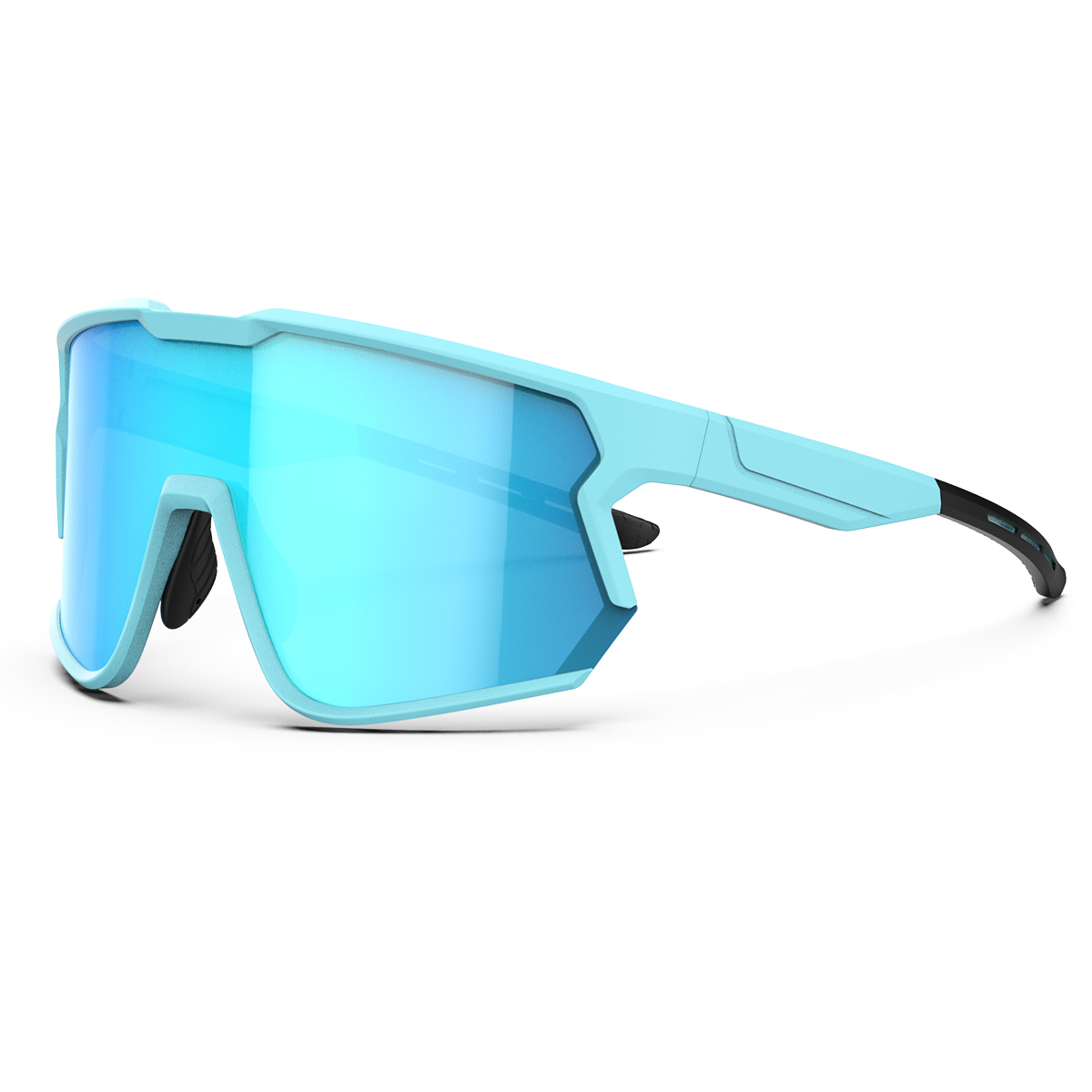
Running changes the relationship between the eyes and the surrounding environment. A pedestrian may move at a moderate pace, while a runner repeatedly shifts direction, passes through shaded streets, encounters bright pavement, and moves between open and enclosed areas. Such changes can make visual comfort more demanding than it appears from a stationary perspective.
Sunlight reflected from roads, vehicles, windows, and wet surfaces can create strong brightness that ordinary lenses may not manage in the same way. Sport performance sunglasses can incorporate optical features intended for active outdoor use, giving runners another way to manage intense light while keeping their surroundings visible.
The visual field matters as well. Narrow eyewear can leave peripheral areas more exposed, which becomes noticeable when runners need to monitor cyclists, vehicles, other athletes, or changes in the route. Wider coverage can provide a broader view without requiring frequent head movement.
Polarization works by reducing certain horizontally oriented reflected light, making it particularly relevant around roads, water, glass, and other reflective surfaces. Polarized sunglasses for running can be useful in bright outdoor environments where reflected glare contributes to visual discomfort, although the benefit depends on the route, weather, and personal sensitivity to glare.
UV protection addresses a different concern. A lens can reduce visible brightness while still requiring appropriate ultraviolet protection, so these functions should not be treated as interchangeable. UV400-rated lenses are commonly specified to provide broad ultraviolet protection, while lens tint influences how bright the environment appears to the wearer.
Contrast is another consideration that receives less attention. Runners often move across surfaces with different textures and brightness levels, including asphalt, concrete, grass, and shaded paths. A suitable lens tint can affect how clearly these changes are perceived, which is why lens selection should reflect the typical running environment rather than appearance alone.
For running eyewear, impact resistance is not optional. ANSI Z87.1 provides a recognized baseline for high-velocity and high-mass impact protection, giving buyers a concrete reference beyond subjective claims of durability.
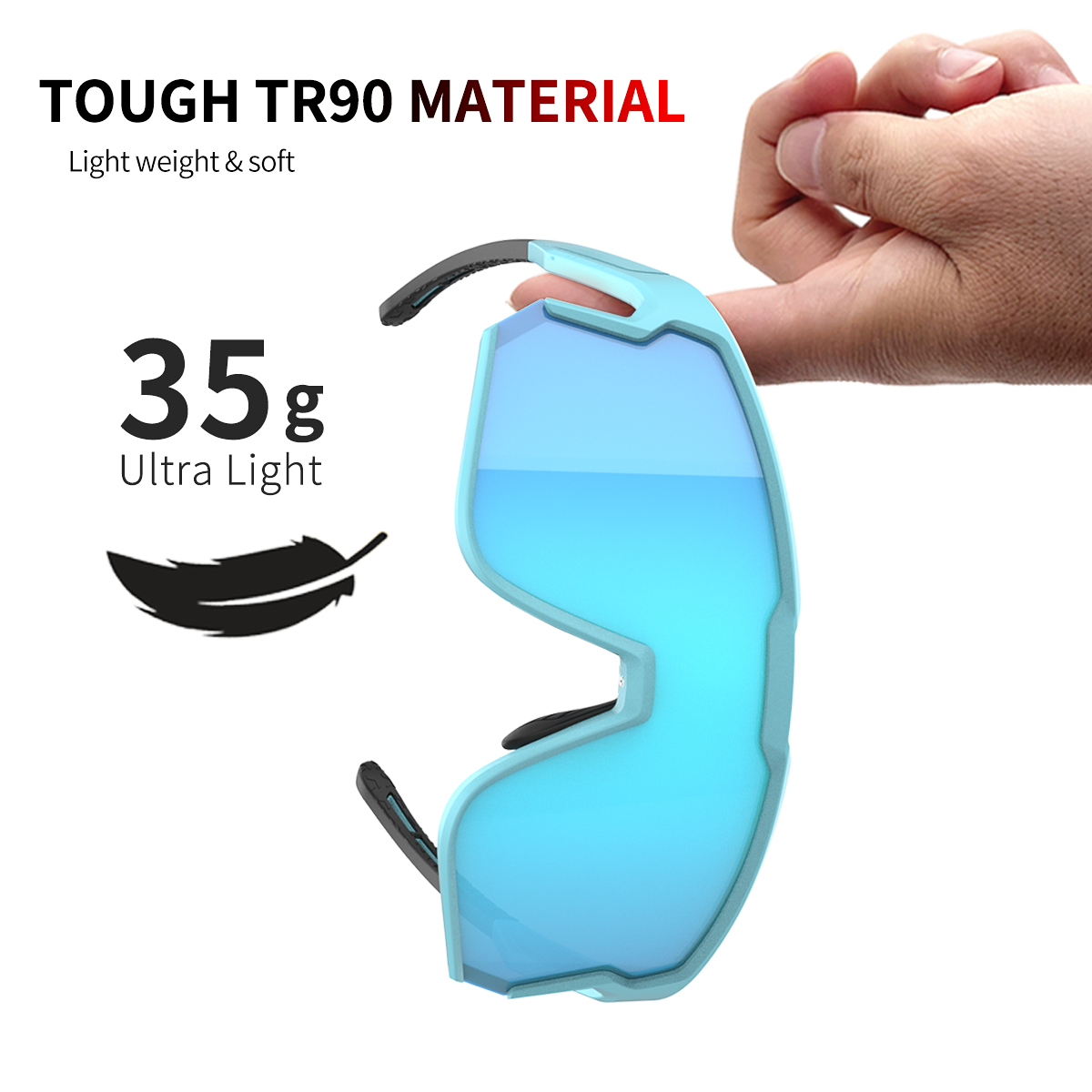
A running frame has to remain stable while the wearer moves repeatedly. Loose eyewear may shift with each stride, while excessive pressure around the nose or temples can become uncomfortable during longer sessions. Ergonomic contact points help distribute pressure more naturally across the face.
One example from our range is the YL777 Large Frame Cycling Sunglasses. The model combines polarized UV400 PC lenses with a lightweight TR90 frame, a wide field of vision, impact-resistant lenses, and wrap-around ergonomic nose pads. Its full-frame protection design is intended for active outdoor use, while logo printing, frame colors, lens tint, packaging, and private-label customization are available for OEM and ODM projects.
Frame coverage also affects protection from wind and airborne particles. A larger lens area can reduce direct exposure around the eyes, although the actual fit still depends on facial dimensions. Comfort comes from the relationship between frame shape, nose support, lens position, and overall weight rather than from any single feature.
Morning road runs, midday training sessions, trail routes, and evening workouts can create very different visual environments. A lens that feels comfortable under strong sunshine may be less suitable once ambient light becomes limited. Runners should consider the hours, route, and weather conditions in which the eyewear will normally be used.
Sport performance sunglasses can also differ in how they balance coverage with ventilation. During vigorous exercise, body temperature rises and moisture accumulates around the face. Airflow around the lens area can help manage this environment, while an appropriate fit reduces excessive movement as the wearer runs.
Impact resistance deserves attention for outdoor activities as well. Running routes may contain loose gravel, branches, insects, or unexpected contact with other objects. Polycarbonate lenses are valued in sports eyewear partly because they combine relatively low weight with impact resistance, making lens material an important specification rather than merely a visual preference.
Start with the environment rather than the appearance of the sunglasses. A runner who spends most sessions beside reflective roads may prioritize glare management, while someone training mainly on shaded trails may place greater emphasis on brightness transmission and contrast.
Next, consider stability during movement. Polarized sunglasses for running should sit securely without creating excessive pressure, and the lens should remain positioned consistently as the head moves. Wide coverage, ergonomic nose support, lightweight construction, and a suitable frame shape can all contribute to a more stable experience.
Customization can also matter in wholesale or team applications. Sport performance sunglasses may need different lens tints, frame colors, logos, packaging, or private-label details depending on the intended market. At YIJIA Optical, we approach these requirements from the perspective of actual sports use, treating optical function, physical comfort, and application conditions as connected parts of eyewear design.
Running sunglasses are not simply darker versions of everyday eyewear. Their value comes from how lens properties, UV protection, frame stability, coverage, weight, ventilation, and impact resistance work together under movement. We at YIJIA Optical develop sports eyewear with these practical differences in mind, while sport performance sunglasses can be adapted to different outdoor activities and usage conditions. For runners, the most useful choice is the one whose optical and physical characteristics match the environment, pace, and duration of their regular training.

